
Learning from other organisations
Table of contents
Further examples of migration peer research
Peer and community research is increasingly being adopted by organisations conducting migration research, as you can see in the case studies we have shared. Here are brief details of some other organisations taking a peer research approach, with links to further information.
NACCOM (the No Accommodation Network) has published a review of its Community Research Programme (2022). Research on experiences following a negative asylum decision in the UK (2023) was designed, led, and delivered by NACCOM’s volunteer Community Researchers. In partnership with Homeless Link, the Community Research volunteer group worked on a project exploring experiences of accessing support from local authorities during the pandemic. You can read the Community Researchers’ thoughts on the findings and recommendations. There are also some blogs sharing their learning from the Community Researcher Programme. The Community Researchers also contributed to a briefing on homelessness among non-UK nationals (2022). NACCOM has appointed a full-time permanent Community Research Facilitator.
The British Red Cross has worked with peer researchers as part of a number of projects, including:
- Research on the experiences of destitution among people seeking asylum (2021). Peer researchers (Ronald Tagwireyi, Adnan Aslan, Zainab Mohamed and Thandiwe Matikiti) were involved in fieldwork design, participant interviews, analysis and recommendations. They also led a workshop with interviewees where initial findings and recommendations were presented, then discussed in two breakout focus groups. The report includes their reflections, and they co-wrote the foreword. Here’s a film made by the peer researchers originally shown at the Scottish Refugee Festival. The peer researchers are involved in ongoing discussions with the Scottish Government to get some of the recommendations in the report put into action – including the introduction of a peer support model to support refugees and people seeking asylum.
- A project focusing on women’s experience of seeking asylum in the UK (2022): 10 research advisors from the VOICES Network were involved in developing research questions, leading interviews, facilitating workshops and developing recommendations.
- A project looking at access to mental health services for refugees and people seeking asylum (2022) involved 16 individuals from the VOICES Network, who collaborated on the design, analysis and solution-development phases of the report.
- The AVAIL (Amplifying the Voices of Asylum Seekers and Refugees for Integration and Life Skills) project (2022) tested different ways of applying co-production techniques to support integration. Peer researchers were involved in data collection and analysis. It was based in the UK, Ireland, Italy, and Latvia. The project produced a series of videos highlighting different activities, including the UK VOICES Network - English version and fersiwn Cymraeg.
- Research on how digital exclusion impacts access to healthcare for people seeking asylum in England (2023) was designed and undertaken in collaboration with five peer researchers with refugee status who carried out 30 in-depth interviews across England with people seeking asylum, and co-produced several aspects of the report.
- A project exploring healthcare for people claiming asylum (2024) was undertaken in collaboration with three peer researchers with lived experience of the asylum system and resulted in the publication of Delivering with dignity: a framework for strengthening commissioning and provision of healthcare services for people seeking asylum.
- Research with refused asylum seekers experiencing destitution in Scotland - peer researchers were involved in fieldwork design, and interviewing participants. Here’s a case study of the co-production approach used in the project.
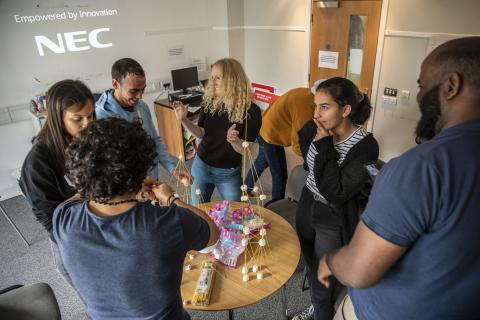
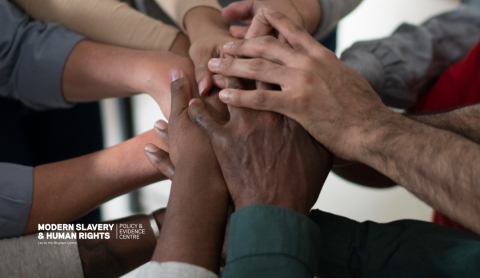
A number of Modern Slavery and Human Rights Policy and Evidence Centre (Modern Slavery PEC) projects have involved peer research:
- The impact of psychological support on the wellbeing of modern slavery survivors has been considered by a partnership project between the University of Birmingham, University of Nottingham, Anti-Slavery International, West Midlands Anti-Slavery Network and Survivor Alliance. . People with lived experience of modern slavery were involved as peer researchers. As part of the project a peer research curriculum was developed, designed to be delivered as 20 fortnightly seminars. This blog written by a peer researcher reflects on meaningful engagement in research. A review is under way to understand the impact of being a peer researcher on individuals’ wellbeing.
- The Modern Slavery Core Outcome Set project aims to identify a minimum standard set of outcomes to be measured and reported when assessing the effectiveness of survivor support programmes. Peer researchers have worked as part of the research team.
- A project assessing what role adult service websites can play in addressing modern slavery in the UK has involved people with lived experience of sexual exploitation in the project design. Survivors have accessed a training programme on research and employability skills and access to higher education.
The Right to Care project aims to improve primary care access and registration for refugees and vulnerable migrants. Doctors of the World (DOTW) and University College London (UCL) have worked with peer researchers on the project. The role included developing the research plan, conducting interviews and membership of the advisory committee.
DOTW also has a team of National Health Advisors – migrants with lived experience of health exclusion – who volunteer to ensure migrants, refugees and people seeking asylum have a greater influence over healthcare policy and practice. They work to coproduce accessible resources, codeliver health access training to migrants and engage with the health bodies and DOTW teams to promote access to healthcare.
Women for Refugee Women (WRW) has published Participatory Action Research: A How to Guide by Researchers with Lived Experience, following the launch of three reports designed and delivered by its team of researchers with lived experience of the UK’s asylum system:
1) Coercion and Control: The Treatment of Women Seeking Asylum in Hotel Accommodation
2) A Decade of Harm: Survivors of Gender-Based Violence Locked Up in Detention
3) Safety and Survival: How the Work Ban Fuels Violence Against Women Seeking Asylum
The guide examines the peer-led participatory action research (PAR) model. It explores the challenges and opportunities in achieving genuine co-production and includes recommendations from WRW’s PAR team of researchers.